
Heat Pump vs. Traditional AC: Which Handles Cedar Park Summers Better?
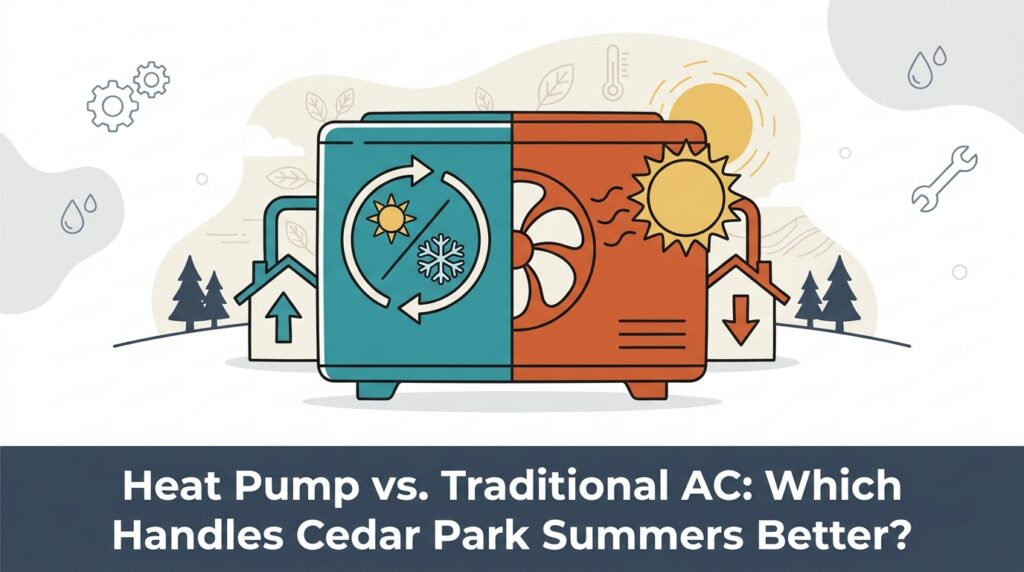
The Heat Pump Cooling Myth: Surviving Extreme Central Texas Heat
When you are weighing a heat pump vs. traditional AC, which handles Cedar Park summers better? A persistent myth suggests that heat pumps are only suitable for mild, temperate climates and will inevitably leave you sweating when the extreme heat arrives. If your current cooling setup is aging out and you are facing the critical decision of replacing it before the peak season hits, the fear that a heat pump might fail during a brutal stretch of 100-degree days is completely understandable. No homeowner wants to invest in a new system only to discover it lacks the power to keep the indoor environment comfortable when July and August deliver their worst.
Here is the reality: a modern air-source heat pump does not sacrifice a single ounce of cooling power. When operating in cooling mode, a heat pump is mechanically identical to a traditional air conditioner. It uses the exact same refrigeration cycle, the exact same compressor technology, and the exact same refrigerant to extract heat from your living space and reject it outdoors. If you are looking to upgrade your home comfort, exploring comprehensive HVAC services will reveal that specialized installations—particularly those tailored to our specific regional climate—ensure absolute reliability. The key is understanding how these systems actually function, rather than relying on outdated assumptions about their capabilities.
Under the Hood: How Heat Pumps and Traditional AC Units Cool Your Home
To understand why a heat pump can easily conquer a harsh Texas summer, you have to look at the fundamental mechanics of residential cooling. Air conditioners do not actually “create” cold air. Instead, they operate on the principle of heat transfer. They absorb thermal energy from inside your house and move it outside. This process relies on a closed loop of chemical refrigerant circulating between an indoor evaporator coil and an outdoor condenser coil.
In a standard air conditioner, warm indoor air is blown across the cold indoor evaporator coil. The liquid refrigerant inside the coil absorbs the heat and flashes into a warm gas. This gas travels outside to the compressor, which pressurizes it, raising its temperature significantly. The hot gas then moves into the outdoor condenser coil, where a large fan blows ambient outdoor air across it. Because the pressurized refrigerant is hotter than the outdoor air—even on a 105-degree afternoon—the heat transfers into the outdoor air. The refrigerant condenses back into a liquid, travels back inside, and the cycle repeats until the thermostat is satisfied.
An air-source heat pump uses this exact same mechanical process to cool your home. It features the same indoor coil, the same outdoor coil, and the same compressor. When the thermostat calls for cooling, the heat pump absorbs indoor heat and pumps it outside just as aggressively and efficiently as a standalone air conditioner. The cooling capacity is identical.
The Role of the Reversing Valve
If a heat pump is essentially an air conditioner, what makes it different? The defining feature of a heat pump is a single, brilliant component called the reversing valve. This specialized brass valve sits near the compressor in the outdoor unit and dictates the directional flow of the refrigerant.
During the winter, the reversing valve shifts, sending the hot, pressurized refrigerant gas inside to the indoor coil, while the outdoor coil takes on the role of absorbing ambient heat from the outside air. In the summer, the valve rests in its default cooling position, directing the flow exactly as a standard AC would. The presence of the reversing valve does not impede the flow of refrigerant, nor does it reduce the system’s ability to extract heat from the home. It simply gives the system the mechanical flexibility to operate in reverse when the seasons change.

Why a Dual-Fuel Heat Pump is the Ultimate Central Texas Setup
While a standard heat pump is highly effective, the unique climate of our region demands a specialized approach. Central Texas is known for its intense, prolonged summer heat, but it also experiences occasional, severe winter freezes. This combination of weather extremes makes a dual fuel heating system the most strategic and resilient choice a homeowner can make.
A dual-fuel setup pairs a high-efficiency electric heat pump with a traditional gas furnace. During the long, brutal cooling season, the heat pump handles all the heavy lifting, operating exactly like a top-tier air conditioner to keep your home crisp and cool. When autumn arrives and temperatures drop into the 40s and 50s, the heat pump operates in reverse, providing highly efficient electric heating. Because mild winter days require very little energy to heat a home, the electric heat pump is far more cost-effective to run than firing up a gas furnace.
However, when a harsh Texas winter storm rolls in and temperatures plummet toward freezing, a heat pump has to work much harder to extract thermal energy from the frigid outdoor air. This is where the dual-fuel system shines. The system’s smart thermostat detects the temperature drop and automatically shuts down the electric heat pump, seamlessly switching over to the gas furnace. The gas furnace provides the intense, rapid heat necessary to combat deep freezes, ensuring your home stays warm without drastically spiking your electric bill.
This hybrid approach offers unparalleled grid resilience and energy efficiency. Relying on local expertise from MLD Services ensures these dual-fuel installations are perfectly calibrated for the region’s specific temperature swings, meaning the switchover point between electric and gas heating is optimized for your exact home profile.
Battling Humidity and High Heat: The Variable-Speed Advantage
Cooling a home in Cedar Park is not just about lowering the air temperature; it is equally about managing indoor humidity. High humidity levels make a home feel sticky, stuffy, and significantly warmer than the thermostat indicates. This is where modern variable-speed heat pumps heavily outperform older, traditional single-stage air conditioners.
A traditional single-stage AC unit operates on a binary system: it is either running at 100% capacity or it is completely off. When the thermostat detects the house is too warm, the system blasts cold air at full volume until the target temperature is reached, and then it shuts down. On extremely hot days, this leads to short-cycling—the system turns on and off rapidly. Because it only runs for short bursts, a single-stage system does not have enough time to pull moisture out of the indoor air, leaving your home cool but uncomfortably clammy.
Modern heat pumps utilize variable-speed compressor technology to solve this exact problem. Here is how the variable-speed advantage fundamentally changes your indoor comfort:
- Continuous, low-capacity operation: Instead of blasting at 100% and shutting off, a variable-speed heat pump can dial its capacity down to 30% or 40%. It runs continuously at a low, quiet speed, acting like cruise control for your home’s climate.
- Maximum moisture removal: Because the system runs for longer, continuous cycles, the indoor air constantly passes over the cold evaporator coil. This extended contact time allows the system to wring significantly more humidity out of the air.
- Improved perceived comfort: Human skin cools itself through the evaporation of sweat. When indoor humidity is low, sweat evaporates easily, making you feel cooler. With a variable-speed heat pump managing the humidity, you can often set your thermostat a few degrees higher and feel just as comfortable, saving energy in the process.
- Elimination of temperature swings: Continuous operation prevents the noticeable hot and cold temperature spikes associated with single-stage units turning on and off. The indoor temperature remains perfectly stable, even during the hottest parts of the day.
Comparing SEER2 Ratings: Efficiency During 100-Degree Stretches
When evaluating how well a system will handle a Texas summer, energy efficiency is a major factor. The harder a system has to work, the more electricity it consumes. The HVAC industry measures cooling efficiency using the SEER2 (Seasonal Energy Efficiency Ratio 2) rating system. The higher the SEER2 rating, the more cooling output the system delivers per unit of electrical energy consumed.
Because modern heat pumps utilize advanced variable-speed technology, they often boast SEER2 ratings that rival or exceed the best traditional air conditioners on the market. When you are facing a multi-week stretch of 100-degree weather, a high SEER2 rating translates directly into better management of electrical loads and lower monthly utility bills.
The following table illustrates how different system types compare in terms of efficiency and performance:
| System Type | Average SEER2 Range | Compressor Operation | Humidity Control |
|---|---|---|---|
| Standard Single-Stage AC | 13.4 – 15.0 SEER2 | 100% On or Off | Basic / Often inadequate in peak summer |
| High-Efficiency Two-Stage AC | 16.0 – 18.0 SEER2 | High (100%) and Low (70%) stages | Good / Reduces short-cycling |
| Modern Variable-Speed Heat Pump | 18.0 – 22.0+ SEER2 | Modulates from 30% to 100% capacity | Excellent / Continuous moisture removal |
As the data shows, upgrading to a high-efficiency heat pump provides superior operational performance. During peak summer months, a system that modulates its energy draw prevents massive spikes in electrical consumption. Over the lifespan of the equipment, the energy savings generated by a 20+ SEER2 heat pump can significantly offset the initial installation investment.
Year-Round Operation: Lifespan and Maintenance Expectations
One critical difference between a standalone air conditioner and a heat pump is the annual workload. A traditional AC unit sits dormant for half the year. A heat pump, however, works year-round—cooling your home all summer and heating it throughout the winter. Because it accumulates more run hours annually, understanding maintenance expectations is vital for maximizing the lifespan of the equipment.
This is another area where the dual-fuel heat pump strategy proves highly beneficial. By sharing the winter heating load with a gas furnace, the heat pump gets a break during the coldest parts of the year. This shared workload alleviates significant mechanical wear and tear on the heat pump’s compressor, extending its operational life closer to that of a traditional AC system.
To ensure a heat pump continues to perform efficiently through extreme weather, routine maintenance is non-negotiable. Homeowners should plan for comprehensive bi-annual checkups. Here is what a proper seasonal maintenance checklist entails:
- Spring cooling check: Technicians inspect the reversing valve to ensure it shifts smoothly into cooling mode, clean the outdoor condenser coils to maximize heat rejection, and verify refrigerant charges are exact before the extreme heat arrives.
- Fall heating calibration: The system is tested for proper defrost cycle operation, the gas furnace components of a dual-fuel setup are inspected for safe combustion, and electrical connections are tightened after a long summer of continuous operation.
- Filter management: Because the system runs year-round, indoor air filters must be checked and replaced more frequently—usually every 30 to 60 days—to prevent airflow restrictions that force the blower motor to overwork.
- Condensate line clearing: The intense humidity removal during summer creates significant condensation. Flushing the drain lines in the spring prevents algae buildup and costly water backups into the home.
Frequently Asked Questions About Cooling with Heat Pumps in Texas
Can a heat pump cool a house in 100 degree weather?
Yes, a modern heat pump is fully capable of cooling a house in 100-degree weather. Because it uses the exact same refrigeration cycle, compressor, and refrigerant as a traditional air conditioner, its cooling capacity is identical. As long as the system is properly sized for the square footage of your home and the ductwork is intact, a heat pump will easily maintain comfortable indoor temperatures during the hottest days of a Texas summer.
Is a heat pump better than an AC in Texas?
A heat pump is often considered a better overall investment in Texas because it provides both high-efficiency cooling in the summer and cost-effective heating during mild winters. While an AC only provides cooling and requires a separate furnace for all heating, a heat pump handles both tasks. When paired with a gas furnace in a dual-fuel setup, it offers the ultimate balance of efficiency and comfort for the unpredictable local climate.
Does a heat pump work as well as an AC in summer?
A heat pump works exactly as well as an AC in the summer. In cooling mode, the reversing valve directs the flow of refrigerant in the exact same pattern used by a standalone air conditioner. There is no mechanical disadvantage or loss of cooling power. In fact, high-end variable-speed heat pumps often provide better humidity control and more consistent cooling than basic single-stage air conditioners.
What is the downside to a heat pump in a hot climate?
The primary downside to a heat pump in a hot climate is that it accumulates more run hours over the course of a year because it operates in both summer and winter. This continuous year-round operation means the system requires strict adherence to bi-annual maintenance schedules to prevent premature wear. Additionally, if the home experiences a rare, extreme winter freeze, a standalone heat pump may struggle, which is why dual-fuel configurations are highly recommended.
Do dual-fuel systems require special maintenance compared to standard ACs?
Dual-fuel systems require comprehensive maintenance because they combine two different types of technology: an electric heat pump and a gas furnace. Technicians must check the refrigeration cycle, compressor, and reversing valve for the heat pump, while also inspecting the burners, heat exchanger, and flues for the gas furnace. This dual-check ensures that the automatic switchover between electric and gas heating functions safely and efficiently.
Make the Right Call for Your Next Cooling System
The myth that heat pumps are unsuited for extreme heat simply does not hold up to technical scrutiny. Whether you are facing a multi-week heatwave or the unpredictable shifts of a central Texas winter, modern heat pumps are engineered to deliver uncompromising comfort. Because their cooling mechanics are entirely identical to traditional air conditioners, you will never sacrifice cooling power when the temperatures spike.
For homeowners in Cedar Park, upgrading to a dual-fuel heat pump offers the ultimate year-round solution. It provides the robust, variable-speed cooling necessary to combat intense summer humidity, combined with the strategic resilience of a gas furnace for winter freezes. If your current system is struggling to keep up, securing a professional consultation to evaluate your home’s specific thermal dynamics is the best next step. A clear, technically sound evaluation will prove exactly how a modern dual-fuel setup can transform your home comfort and lower your energy costs for years to come.
Need HVAC Service?
Contact the experts at MLD Services.
Call us at 512-528-4258!