
Why Texas Summer Debris and Fire Ants Cause Sudden AC Failures
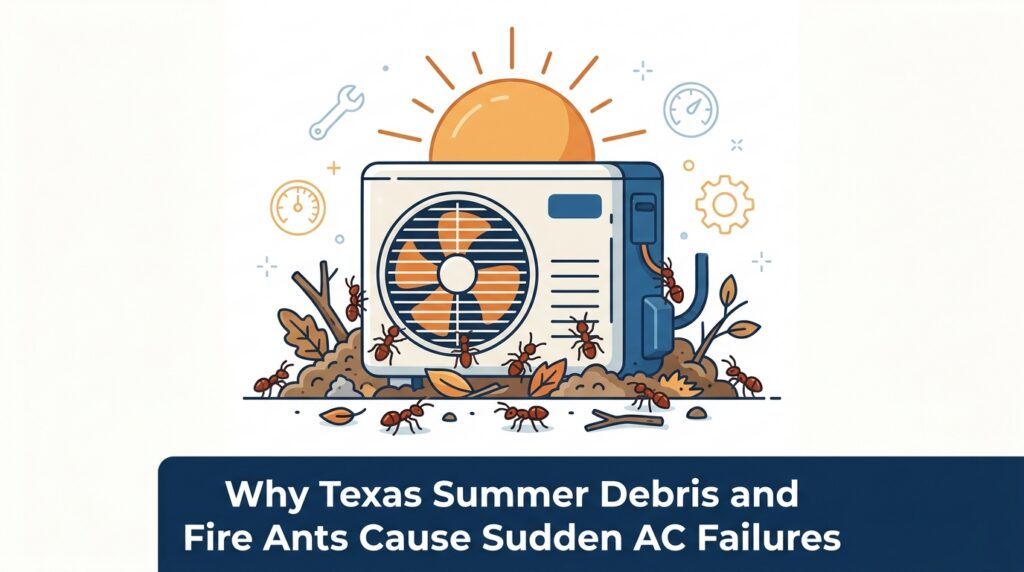
The Hidden Threat to Outdoor Condensers as Temperatures Rise
Another intense season is right around the corner, which means protecting your outdoor AC unit from Texas summer debris and pests needs to happen before the first major heatwave hits. When the thermometer climbs and the ground dries out, your air conditioning system becomes a beacon for local insects seeking shelter. To ensure your system is fully prepared to handle the extreme weather and biological threats, relying on professional HVAC services from a team that understands the local area is the smartest first step.
Most homeowners know they need to keep grass clippings away from the outdoor condenser unit. However, in our years of servicing AC units across the local area, our business has found that standard debris clearing is only half the battle. As temperatures rise, soaring heat drives pests out of the baked soil and into specific, shaded microclimates. The most destructive of these pests is the Red Imported Fire Ant. These ants do not just build mounds next to your concrete pad; they actively swarm the high-voltage electrical contactors inside your outdoor unit.
The concrete problem you face is a sudden, unexpected system shutdown on the hottest day of the year. Recognizing pest-related electrical failures is critical. You are faced with a crucial decision point: how do you protect the delicate components of your condenser from these aggressive insects without causing permanent chemical damage to the system yourself?
Understanding the Dual Threat:
- Airflow Restriction: Leaves, dirt, and overgrown vegetation block the vital airflow your condenser needs to release heat, forcing the compressor to work harder and run hotter during a Texas summer.
- Biological Invasion: The shaded, slightly moist environment created by trapped debris provides the perfect staging ground for fire ants to launch an assault on your electrical housing.
Protecting your system requires understanding exactly why these pests target your equipment and knowing the safe, effective ways to keep them out.
The Pheromone Cascade: How Fire Ants Destroy AC Contactors
To stop an infestation, you have to understand why it happens in the first place. Fire ants do not just stumble into your air conditioner by accident. They are naturally drawn to the electromagnetic fields generated by the AC contactor—the high-voltage switch that turns your compressor and fan on and off. During a long Texas summer, your AC cycles on constantly, creating a steady, powerful magnetic field that acts like a beacon to foraging ants.
When our technicians respond to sudden breakdowns, we often see the aftermath of what happens when a fire ant wanders into the electrical housing and steps across the open contacts of the switch. The process is a fascinating, yet highly destructive, chain reaction known as the pheromone cascade.
The Mechanism of Failure:
- The Initial Shock: A single ant bridges the gap between the electrical contacts and is instantly electrocuted when the system tries to turn on.
- The Chemical Alarm: In its final moment, the dying ant releases a powerful alarm pheromone made of chemical compounds called terpenes.
- The Swarm Effect: This chemical signal alerts nearby ants that there is an attacker. Hundreds of defending ants rush into the electrical box to fight the unseen enemy, only to be electrocuted themselves.
- The Insulating Buildup: Each new casualty releases more alarm pheromones. Within a very short time, a massive buildup of dead insects forms right between the electrical contacts.
The ultimate result is sudden system failure. The accumulated bodies of the ants eventually insulate the electrical connections. When the thermostat calls for cooling, the switch closes, but the electricity cannot flow through the barrier of dead insects. This causes the metal contacts to pit, stick together, or fail completely, leaving your home without air conditioning during the peak of a Texas summer.

Why Dry Yard Debris Acts as a Bridge for Pests
The environment directly surrounding your outdoor unit plays a massive role in whether or not pests can access the electrical components. Prolonged dry spells are common during a Texas summer, and these conditions drastically increase the amount of airborne debris like dry leaves, loose dirt, and dried grass clippings swirling around your yard.
When this debris builds up inside or around the base of the condenser, it creates a highly favorable microclimate. The intense heat and prolonged dry spells specifically drive ants to seek out the tiny amounts of moisture and deep shade provided by a thick layer of unraked leaves or overgrown weeds right next to your AC unit. If you want to dive deeper into how weather impacts your system, understanding how environmental issues can affect your AC is a great next step.
Our team frequently sees overgrown vegetation and stacked debris acting as physical bridges. Instead of having to cross a hot, dry concrete pad, pests can simply march up a tall weed or a pile of leaves directly into the louvers of your air conditioner, giving them a straight path to the electrical housing.
Common Debris Bridges to Watch For:
| Debris Type | How It Threatens Your System |
|---|---|
| Tall Weeds & Vines | Provides a direct climbing path over the metal casing and straight into the internal components. |
| Thick Mulch | Holds moisture against the concrete pad, creating a perfect nesting ground for fire ant colonies. |
| Grass Clippings | Plasters against the aluminum fins, restricting airflow and providing shade for foraging insects. |
| Unraked Leaves | Traps humidity at the base of the unit, rotting slowly and attracting various pests seeking shelter. |
This creates a severe dual threat. Not only is the debris suffocating the unit and driving up your energy bills by restricting airflow, but it is also handing a VIP pass to pests that will eventually destroy the electrical contactor.
The Danger of Using Standard Pesticides on HVAC Equipment
When a homeowner spots a line of ants marching into their expensive air conditioner, the most common instinct is to grab a can of liquid bug killer and spray it directly onto the unit. While this might kill the ants in the short term, our experts warn that it is one of the most dangerous things you can do to your HVAC system during a Texas summer.
Many standard household pesticides are petroleum-based or contain harsh chemicals that are highly corrosive to the delicate metals inside your condenser. The aluminum fins and copper coils that release heat from your home are very thin. When corrosive bug sprays sit on these metals, they cause a chemical reaction that eats away at the material, leading to massive refrigerant leaks that are incredibly expensive to fix.
Beyond the chemical risks, there are severe electrical hazards. Your outdoor unit houses high-voltage capacitors and contactors. Introducing any kind of liquid spray directly into the electrical panel can instantly cause electrical shorts, blow the system fuses, or permanently fry the control board.
The Hidden Cost of DIY Sprays:
- Corrosion: Chemicals strip the protective coatings off copper coils.
- Electrical Shorts: Liquids bridge electrical connections, causing immediate failure.
- Residue Buildup: Sticky sprays attract more dirt and dust, clogging the fins faster.
- Warranty Voiding: Unauthorized chemical applications directly on the equipment can completely void your manufacturer warranty.
Protecting your system means keeping pests away without introducing corrosive elements to the equipment itself.
Equipment-Safe Methods for Clearing the Condenser Perimeter
Because you cannot safely spray pesticides directly onto the unit, you must rely on preventative landscaping and safe deterrence methods. Providing a clean, dry buffer zone is your best defense against an ant invasion during a Texas summer.
The goal is to eliminate the microclimates and physical bridges without ever touching the sensitive internal electrical components. By following a strict perimeter protocol, you can drastically reduce the chances of a pheromone cascade.
Your Safe Clearing Checklist:
- Establish a Two-Foot Clearance Rule: Ensure all vegetation, bushes, mulch, and fencing are kept at least 24 inches away from all sides of the condenser. This allows the unit to breathe and removes climbing bridges.
- Gently Remove Exterior Debris: Use a soft-bristle brush or a very gentle shower spray from a garden hose to wipe away dry leaves, cobwebs, and grass clippings from the exterior fins. Never use a pressure washer, as the high force will instantly bend the fragile aluminum fins and block airflow.
- Deploy Baits at a Distance: Place ant baits or granular pest deterrents in the surrounding yard, safely away from the AC unit itself. The goal is to draw the pests outward and away from the equipment, not to kill them right on top of the concrete pad.
- Maintain a Dry Concrete Slab: Ensure your gutters are not dumping water near the AC unit and that sprinklers are not hitting the pad. Keeping the concrete clean and bone-dry eliminates the moisture that ants desperately seek during droughts.
By strictly managing the environment around the unit, you force pests to look elsewhere for shelter.
Why Generic AC Maintenance Misses Pest-Induced Wear
If your system does suddenly stop cooling, properly diagnosing the failure is critical. To an untrained eye, standard electrical wear and tear on a contactor looks remarkably similar to pest-induced pitting. Both result in scorched metal and a switch that refuses to close.
However, failing to identify the specific root cause is a costly mistake. If a generic technician simply swaps out the burned contactor for a new one but fails to clean out the pheromone residue left behind by the dead ants, the problem will likely recur within days. The chemical alarm signal (terpenes) is still active inside the electrical box, and a fresh wave of ants will march right back in to attack the brand-new part.
This is where our business’s deep local experience matters. Diagnosing and preventing Texas-specific pest damage—like fire ants swarming electrical contacts—requires a technician who knows exactly what to look for. When a contactor fails during a Texas summer, our experts do not just replace the part; we look for the hidden signs of an infestation.
The Comprehensive Expert Approach:
- Identifying Pheromone Residue: Checking the bottom of the electrical cabinet for the telltale signs of ant bodies and chemical markers.
- Cleaning the Housing: Safely neutralizing and removing the residue so new ants are not attracted to the replacement part.
- Sealing Entry Points: Carefully inspecting the electrical conduit and safely sealing tiny gaps where pests are marching into the control box.
- Treating the Root Cause: Addressing the environmental factors around the pad that allowed the ants to access the unit in the first place.
A thorough, localized approach ensures that once the system is fixed, it actually stays fixed.
Frequently Asked Questions About AC Pest Protection
How do I keep ants out of my AC contactor?
Our team recommends maintaining a clear, dry perimeter around your outdoor unit as the most effective method. Keep all mulch, plants, and debris at least two feet away from the metal casing. Place ant baits in the surrounding yard to draw colonies away from the equipment. Finally, have a licensed professional inspect and safely seal the electrical housing to block their entry points.
Can fire ants ruin an air conditioner?
Yes, fire ants can cause sudden and severe failure by swarming the high-voltage contactor. When they are electrocuted, they release alarm pheromones that attract hundreds of other ants to the electrical switch. The massive buildup of dead bodies eventually insulates the electrical connection, causing the system to fail to start or run continuously.
Is it safe to spray bug spray on an AC unit?
No, spraying liquid bug killer directly on your air conditioner is highly discouraged. Many standard pesticides contain harsh chemicals that can severely corrode the aluminum fins and copper coils. Furthermore, spraying liquids into the electrical panel can cause immediate electrical shorts and permanent damage to the control board.
How do you clean debris out of an outside AC unit?
Always turn off the power at the breaker before attempting any exterior cleaning. You can remove exterior debris like leaves and grass clippings by hand or by gently brushing the fins with a soft-bristle brush. However, professional maintenance is absolutely required for opening the cabinet and performing internal cleaning to ensure delicate components are not damaged.
What are the signs of a failing AC contactor?
The most common sign is a loud humming, buzzing, or clicking noise coming directly from the outdoor condenser when it tries to start. You may also notice that the indoor vents are blowing warm air because the outdoor compressor isn’t receiving power. In severe cases, the outside unit simply won’t turn on at all despite the indoor thermostat running normally.
Secure Your Outdoor Unit Before the Heat Peaks
Understanding the unique threat that local pests pose to your electrical components gives you a massive advantage. By maintaining a clean, two-foot perimeter and avoiding the use of corrosive chemical sprays, you can actively protect your system from sudden pheromone-induced failures. Knowing the safe, actionable prevention methods ensures your equipment stays healthy.
However, preventative landscaping can only do so much if pests have already found their way into the electrical housing. It is vital to prepare your unit before the most intense heat and dry spells of a Texas summer arrive and push pests to seek shelter in your equipment. Do not wait for a sudden breakdown on a triple-digit afternoon.
To ensure your contactor is clean, functional, and free of hidden pest damage, now is the time to take action. We highly recommend you contact our team for an AC inspection so a professional can safely evaluate and secure your system for the season ahead.
Need HVAC Service?
Contact the experts at MLD Services.
Call us at 512-528-4258!